
Home / Services / Wall and Drywall Water Damage
Wall and Drywall Water Damage Repair in Bartow, FL
Water travels inside walls where you cannot see it. This page covers wet drywall, baseboards and plaster, and how crews decide what to dry, cut and rebuild.
- Drywall and plaster
- Wall cavity drying
- Repair, texture and paint
Signs that water is inside the wall
- Paint that bubbles, peels or blisters
- Baseboards that swell, gap or stain
- Drywall that feels soft or crumbles at the bottom
- A musty smell that is strongest near one wall
- Brown or yellow stains that spread slowly
- Wallpaper seams that lift
Drywall is a gypsum core wrapped in paper, and the paper is what mold and moisture attack. Wet gypsum loses strength, so a wall that has sat wet for days can soften and crumble even if it looks fine on the surface.
Water in a wall: what it usually comes from
Plumbing in the wall
A leaking supply line, shower valve or drain behind the drywall soaks it from inside. See burst pipe water damage.
Roof and window leaks
Wind-driven rain gets behind siding and around frames, then runs down inside the wall.
Floor flooding
Water on the floor wicks up the drywall behind baseboards and can climb several inches.
Appliance and fixture leaks
Toilets, tubs, dishwashers and ice-maker lines leak against walls.
What to do first when a wall is wet
- Turn off power to the wall circuit if water is near an outlet or switch.
- Move furniture away and pull baseboard covers if you can do it safely.
- Do not paint or caulk over a wet wall.
- Photograph the stain and measure it so you can see whether it grows.
Wet drywall and insulation are dried or replaced following the ANSI/IICRC S500 standard for professional water damage restoration, based on the water category and moisture readings.
Typical wall damage scenarios and what happens next
A toilet or supply line upstairs leaks through to a closet ceiling and the wall beside it. The crew opens the ceiling to drain water, checks the wall and removes only the wet drywall.
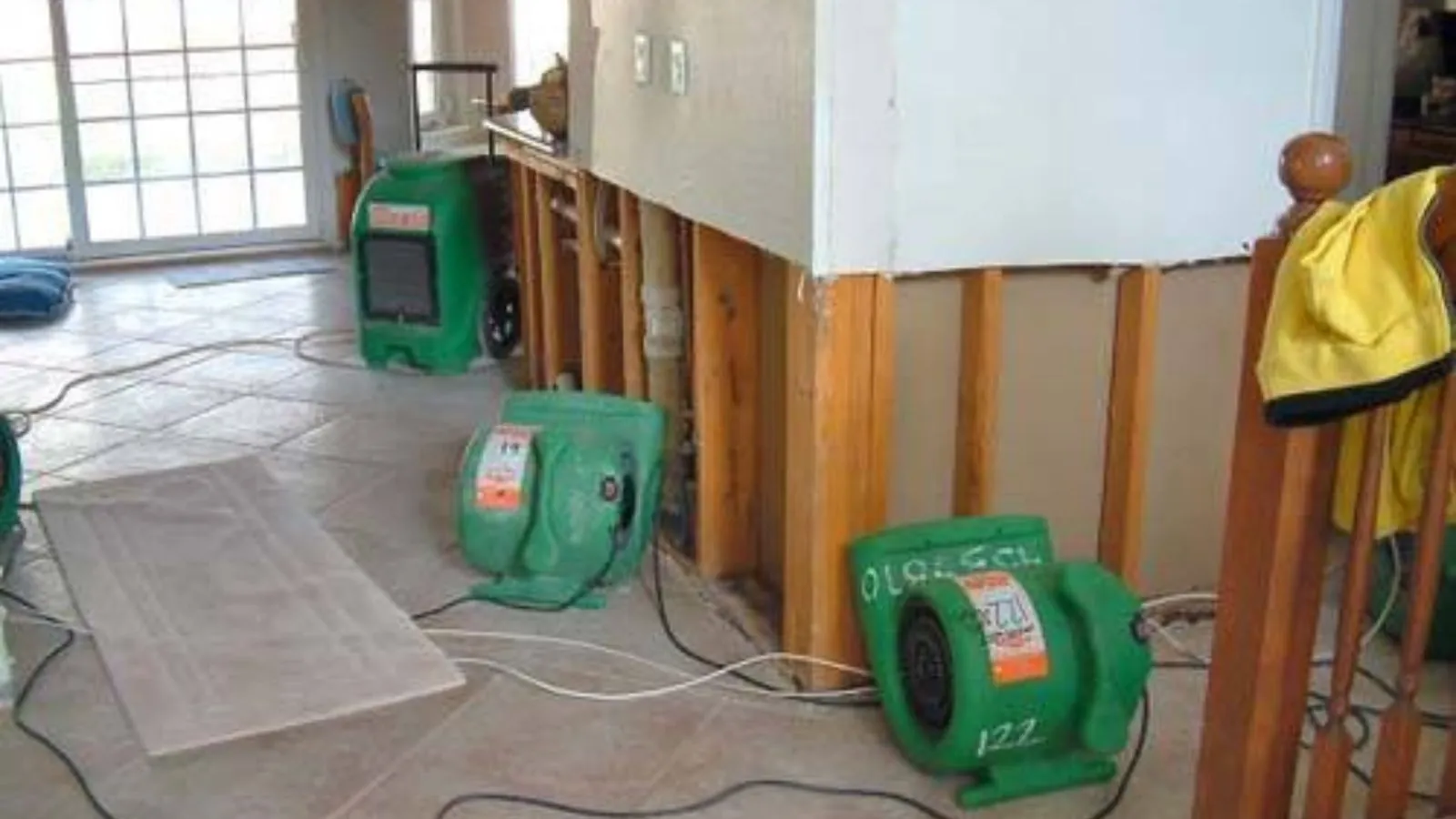
A washing machine hose or dishwasher drain soaks the lower wall behind the appliance. The crew cuts a clean line at the height where moisture readings stop, which is often 2 feet or less from the floor.
A roof leak runs down the inside of an exterior wall. The wall is checked from the top down, because water that entered high can end up behind the baseboard.
When drywall can be dried and when it must be cut
Often dried in place
- Clean water caught within a day or two
- Painted drywall with no swelling
- Small wet areas with open access
- Walls with no insulation soaked
Usually cut out
- Contaminated water of any kind
- Soft, crumbling or sagging drywall
- Walls wet for several days
- Insulation soaked behind the board
Cutting out a section of wall is not a failure. It lets crews see the cavity, dry the framing and prevent mold, and it is usually cheaper than a hidden moisture problem. The EPA advises drying water-damaged materials within 24 to 48 hours, and cutting is often the step that makes that possible.
Plaster walls in older Bartow homes
Houses in the Northeast Bartow and South Bartow historic residential districts, built from the 1880s to the early 1900s, may have plaster-and-lath walls instead of drywall. Plaster can absorb water and loosen from its lath, and old paint may contain lead, so test before sanding or disturbing it.
Plaster work is a specialty repair, and not every drywall crew does it. Ask whether the people working on your walls have done plaster repair before, and check with the City of Bartow Building Department about permits for structural wall work.
How walls are dried and rebuilt
- 1
Map
A moisture meter and thermal camera mark the wet area.
- 2
Open and remove
Baseboard comes off, and wet drywall and insulation are cut out.
- 3
Dry
Air movers and dehumidifiers dry the framing, sometimes with ports to push air into wall cavities.
- 4
Rebuild
New drywall, tape, texture, primer and paint are installed once readings are dry.
For the equipment, see structural drying and dehumidification. If the wall shows dark spots or smells strongly musty, the next step may be on mold remediation.
What affects wall repair cost, and insurance
| Factor | Effect |
|---|---|
| Amount of drywall removed | More linear feet of cut line means more removal and replacement. |
| Insulation and trim | Soaked insulation and baseboards are replaced. |
| Texture and paint | Matching texture and paint adds finish work. |
| Drying days | Equipment is priced per unit per day. |
| Plaster or specialty finishes | These need specialist labor. |
Call (844) 950-6900 and the scope and price are explained before work starts.
A sudden leak that soaks a wall is often covered, while a slow leak that went unrepaired often is not. Photograph the wall before it is opened, and ask your insurer what it requires.
Common questions
Can wet drywall be saved?
Sometimes. Clean water caught early, on firm drywall with no swelling, can be dried in place. Soft or contaminated drywall is cut out.
Why is paint bubbling on my wall?
Bubbling paint usually means moisture is behind it, from a leak, wicking or humidity. A meter shows how far it goes.
How high do you cut the drywall?
Only as high as the readings show moisture, often 2 feet or less after a floor leak, and higher after a leak from above.
Do you repair plaster walls?
Plaster repair is a specialty, so ask about experience before agreeing to it. Older homes may also need lead-safe practices.
Will the new wall match?
Texture and paint can be matched closely, though an exact match is not always possible.
Water damage in Bartow? Call now
The line is open around the clock. Tell us what happened and we will explain the scope and price before work starts.
Call (844) 950-6900