
Home / Services / Crawl Space Water Damage
Crawl Space Water Damage in Bartow, FL
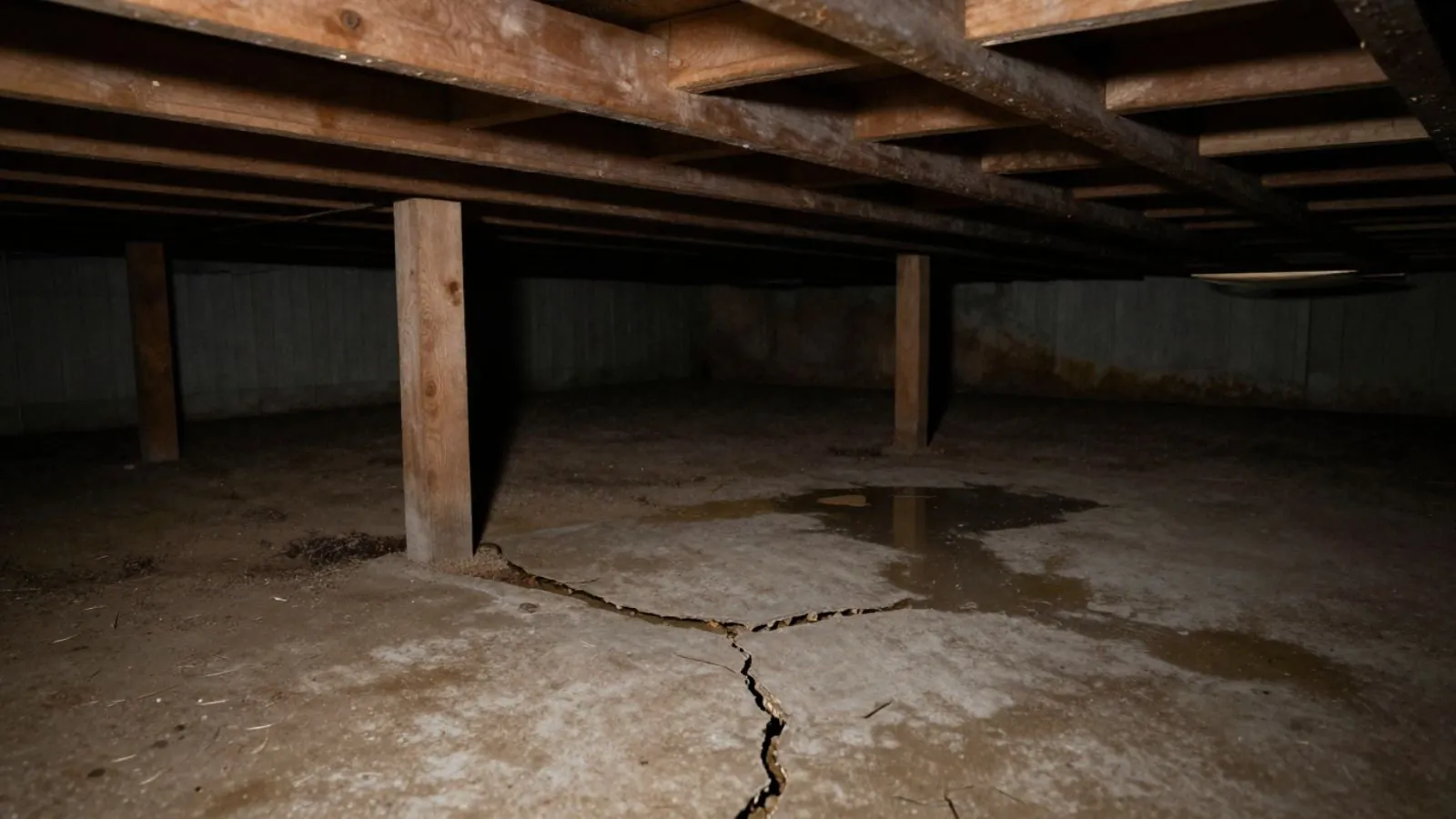
A crawl space with standing water, sagging insulation or a musty smell is a damp space under your floors. This page covers the under-floor void and how it is dried.
- Standing water pumped
- Vapor barrier and insulation
- Joists and subfloor checked
What water in a crawl space does to a house
A crawl space is the shallow void between the ground and a raised floor, and when it holds water the damage rises into the house. Wet soil sends humidity up into floor joists and subfloor, insulation sags and falls, and the air that travels up through the floor carries a musty smell.
The EPA advises keeping indoor humidity below 60 percent and drying water-damaged materials within 24 to 48 hours. In an area with heavy summer rain, a crawl space that stays damp is the kind of condition that keeps both numbers out of reach.
Where crawl space water comes from
Rain and runoff
Gutters that dump at the foundation, low spots in the yard and clogged vents move storm water toward the crawl space.
Plumbing leaks
A leaking supply or drain line above drips onto the ground below and can run for months unseen.
HVAC condensate
Ductwork and air handlers in crawl spaces can drip or sweat onto insulation and soil.
Rising surface water
In heavy storms, flood water enters through vents. For that case see flood damage cleanup.
The standard and the humidity target behind crawl space drying
Drying in a crawl space follows the ANSI/IICRC S500 standard for professional water damage restoration in the same way as drying a room, with moisture readings in framing and subfloor tracked until they are normal. The EPA advises keeping humidity below 60 percent, ideally between 30 and 50 percent, which is hard in a ground-level space without a plan to keep moisture out.
Wear gloves and avoid breathing dust if you go in, and do not enter a crawl space with standing water near wiring.
Signs the space under the floor is wet
- A musty smell in the rooms above, especially near floor vents
- Floors that feel soft, cupped or bouncy
- Insulation hanging down or stained
- Sweating pipes or ducts under the house
- Visible water, mud or white mineral streaks on the foundation wall
If an older raised-floor house has a crawl space, that void is also where an old plumbing leak can hide for years. Check by flashlight, wear gloves and a respirator, and do not enter if there is standing water near electrical wiring.
How a crawl space is dried and cleaned
- 1
Pump out water
Submersible pumps clear standing water and mud.
- 2
Remove wet material
Soaked insulation, stored items and debris come out and are bagged.
- 3
Dry the structure
Air movers, dehumidifiers and meters track the joists and subfloor.
- 4
Protect
A ground vapor barrier, drainage fixes and sealed vents help keep it dry later.
Wood joists and subfloors can dry out if they have not been wet for long, which is why moisture mapping comes before any decision to remove them. A structural engineer or licensed contractor should look at joists that are rotten or sagging.
Honest limits of restoration
Restoration dries and cleans the space, but it does not regrade a yard or fix a drainage problem. If water returns every time it rains, a drainage contractor or foundation specialist solves the cause. Our crew will tell you when the problem is outside the restoration scope.
Whole-floor water from a burst line above is handled through water extraction first, and a mold question after prolonged dampness continues on mold remediation.
What affects the cost and what insurance may cover
| Factor | Effect |
|---|---|
| Access and height | Tight crawl spaces slow work and need smaller equipment. |
| Water amount and source | Standing water takes pump time, while a damp space is mostly drying. |
| Insulation and debris | Soaked insulation and stored items are removed and disposed of. |
| Drying days | Equipment is priced per unit per day. |
| Repairs after drying | Vapor barrier, joist and subfloor repairs are separate scope. |
Call (844) 950-6900 and the scope and price are explained before work starts.
Sudden water from a burst pipe may be covered by a homeowners policy, while long-term dampness and drainage problems usually are not. Photograph conditions before cleanup and ask your insurer how crawl space water is handled.
Common questions
Is water in my crawl space an emergency?
Standing water is urgent if it came from a burst line or is rising. A damp space with no active source is serious but not an after-hours priority, and the line is open 24/7 either way.
Can a crawl space be dried without removing the insulation?
Only if the insulation is dry. Wet insulation sags, holds water against the floor and usually has to come out.
Is a vapor barrier enough to keep it dry?
A ground vapor barrier slows moisture from the soil but does not stop rain runoff or leaks. Drainage and plumbing problems have to be fixed too.
Does a wet crawl space cause mold?
It can, because dark, damp wood is a common place for mold. Ask about testing if you see growth or smell a strong musty odor.
Is a crawl space the same as a basement?
No. A basement is a full below-grade room, and a crawl space is a shallow void. The drying methods are similar, but the access and risks differ.
Water damage in Bartow? Call now
The line is open around the clock. Tell us what happened and we will explain the scope and price before work starts.
Call (844) 950-6900