
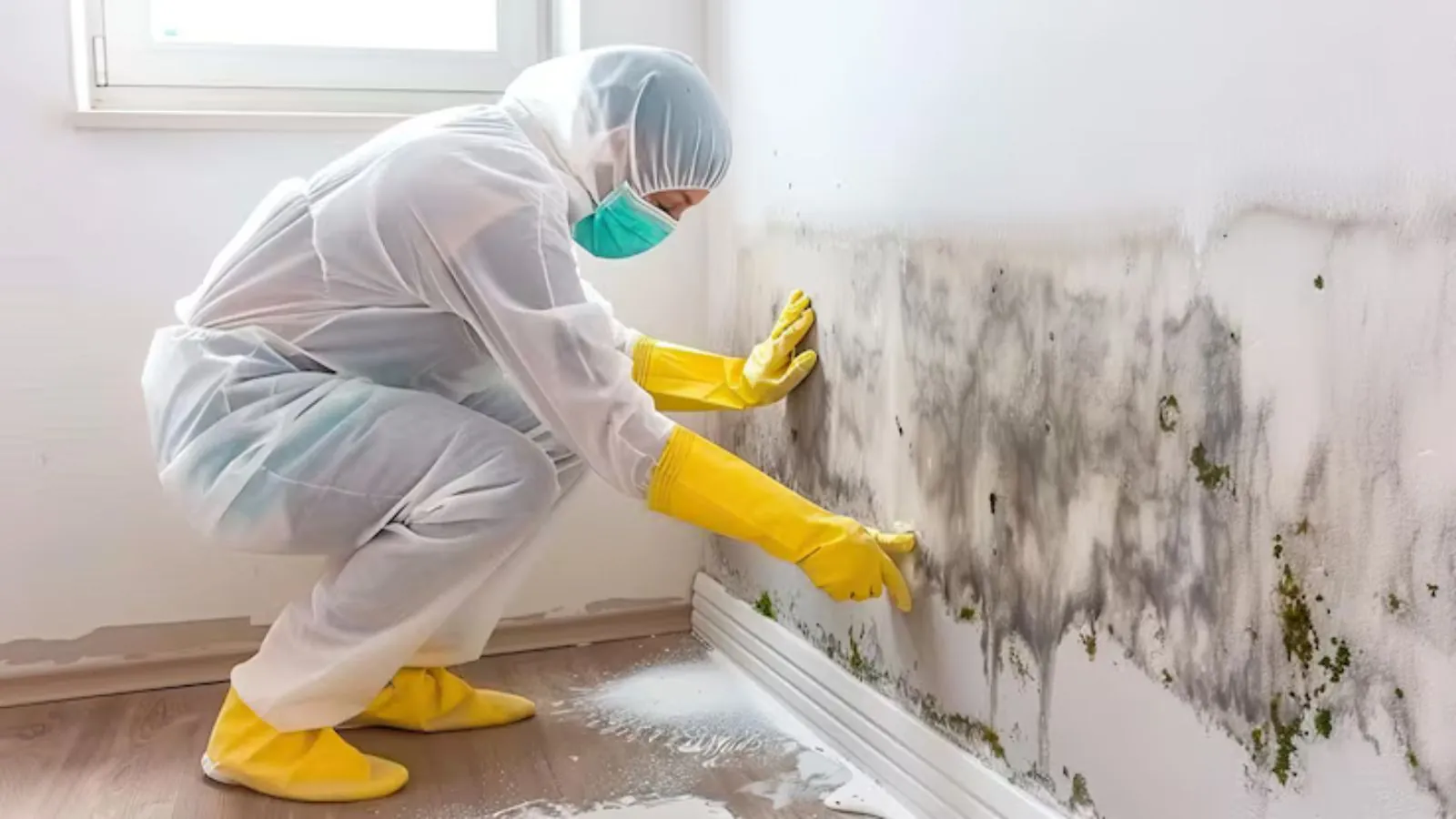
Musty smell, dark spots or a stain that keeps coming back?
A musty odor, dark patches on a ceiling or wall, or a stain that returns after painting usually means there is moisture behind the surface. The trade name for removing the growth is mold remediation, and it starts with finding and fixing the water.
The EPA says the key to mold control is moisture control, and that wet materials should be dried within 24 to 48 hours. Mold left in place after the water is gone can still be a problem, but cleaning the surface without fixing the leak only gives it something to grow back on. Drying comes first, see structural drying and dehumidification and ceiling water damage repair.
Inspection and testing before anything is removed
Inspection looks for the moisture source and the extent of growth. A moisture meter and a thermal camera find damp materials, and a visual check looks at ceilings, closets, baseboards and the area around air handlers. Testing, such as air or surface sampling, is sometimes used to document what is present.
Florida licenses mold assessors and mold remediators through the Department of Business and Professional Regulation under Chapter 468, Part XVI of the Florida Statutes. Ask for the license number of anyone who inspects or removes mold, and check it on the state site.
The same law bars an assessor from remediating a structure they assessed within the previous 12 months, so the person who writes the assessment and the person who removes the mold are generally separate. Ask how that rule applies before you sign a contract.
Selling or financing a home with a mold finding
A buyer who learns of mold during an inspection may ask the seller to remove it before closing, and a lender may hold a loan until the issue is addressed. Lenders and appraisers set their own requirements, so ask the lender what proof it wants before work starts.
Many sellers use independent post-remediation clearance testing, done by a party other than the remediator, to document that the area was cleaned to the standard. No company can promise that a lender will accept a result, and the clearance only describes conditions on the day it was taken.
Keep the water repair records, the remediation scope and the clearance report together, because a buyer or lender may ask for all three.
How remediation works under the S520 standard
- 1
Fix the water source
A plumber, roofer or HVAC technician repairs the leak first.
- 2
Contain
Plastic barriers and negative air machines with HEPA filters keep spores from spreading.
- 3
Remove and clean
Porous materials with growth, such as drywall and insulation, are removed, and hard surfaces are cleaned.
- 4
Dry and verify
Dehumidifiers and air movers dry the area, and clearance confirms the work.
ANSI/IICRC S520 is the published standard for mold remediation, and you can ask any company whether its crews work to it. The EPA says mold areas larger than 10 square feet, or major mold events, may require professional remediation.
Where mold usually starts after a leak
Ceilings and attic
Roof leaks and AC condensate soak insulation and drywall above the room. See AC leak water damage.
Closets and bathrooms
Upstairs toilet and supply line leaks wet closet walls and the ceiling below.
Behind appliances and cabinets
Slow leaks stay hidden for months and keep materials wet.
Crawl spaces and slabs
Damp soil and wood under the floor hold moisture. See crawl space water damage.
Limits and honest expectations
Remediation removes mold and the materials it grew on, and it dries the area, but it cannot promise mold stays away if moisture returns. Questions about health effects belong with a physician, and anyone with health concerns should talk to one before entering a mold area.
Wear an N-95 respirator, gloves and eye protection if you handle small amounts of mold yourself. Do not run the HVAC system if you suspect mold at the air handler or in the ducts, because it can spread spores through the house.
Cost factors, ZIP codes and insurance for mold work
| Factor | Effect |
|---|---|
| Area of growth | More square feet means more containment and removal. |
| Materials affected | Drywall and insulation are removed, while hard surfaces are cleaned. |
| Access and containment | Attics, crawl spaces and occupied rooms change setup. |
| Testing and clearance | Assessment and post-remediation testing are separate from removal. |
| Drying and rebuild | Drying equipment and rebuild are separate scope. |
Call (844) 950-6900 and the scope and price are explained before work starts.
We take mold calls from Bartow ZIP codes 33830 and 33831, and nearby towns on the service area list. Many policies cover mold only when it follows a covered water loss and limit the amount, so read your policy and ask your insurer before work begins.
Common questions
How do I know whether I have mold or just a stain?
Mold often has a musty smell and can look fuzzy, spotted or slimy. A stain with no smell may be old water damage, and a meter or test can tell the difference.
Do I need mold testing before remediation?
Not always. Testing is useful for documentation, for a sale or loan, or when the source is unclear. The visible growth and moisture often make the scope clear.
Who can do mold work in Florida?
Florida licenses mold assessors and remediators under Chapter 468, Part XVI. Ask for the license number and verify it with the state, and know that an assessor cannot remediate a structure they assessed in the prior 12 months.
Will a lender accept my clearance report?
Lenders set their own rules. Ask the lender in advance what documentation it wants, and keep your repair and clearance records.
Can I clean mold myself?
Small areas on hard surfaces can be cleaned with detergent and water and dried completely, wearing an N-95 respirator. Larger areas, 10 square feet or more, or growth in HVAC systems, call for professionals.
Water damage in Bartow? Call now
The line is open around the clock. Tell us what happened and we will explain the scope and price before work starts.
Call (844) 950-6900