
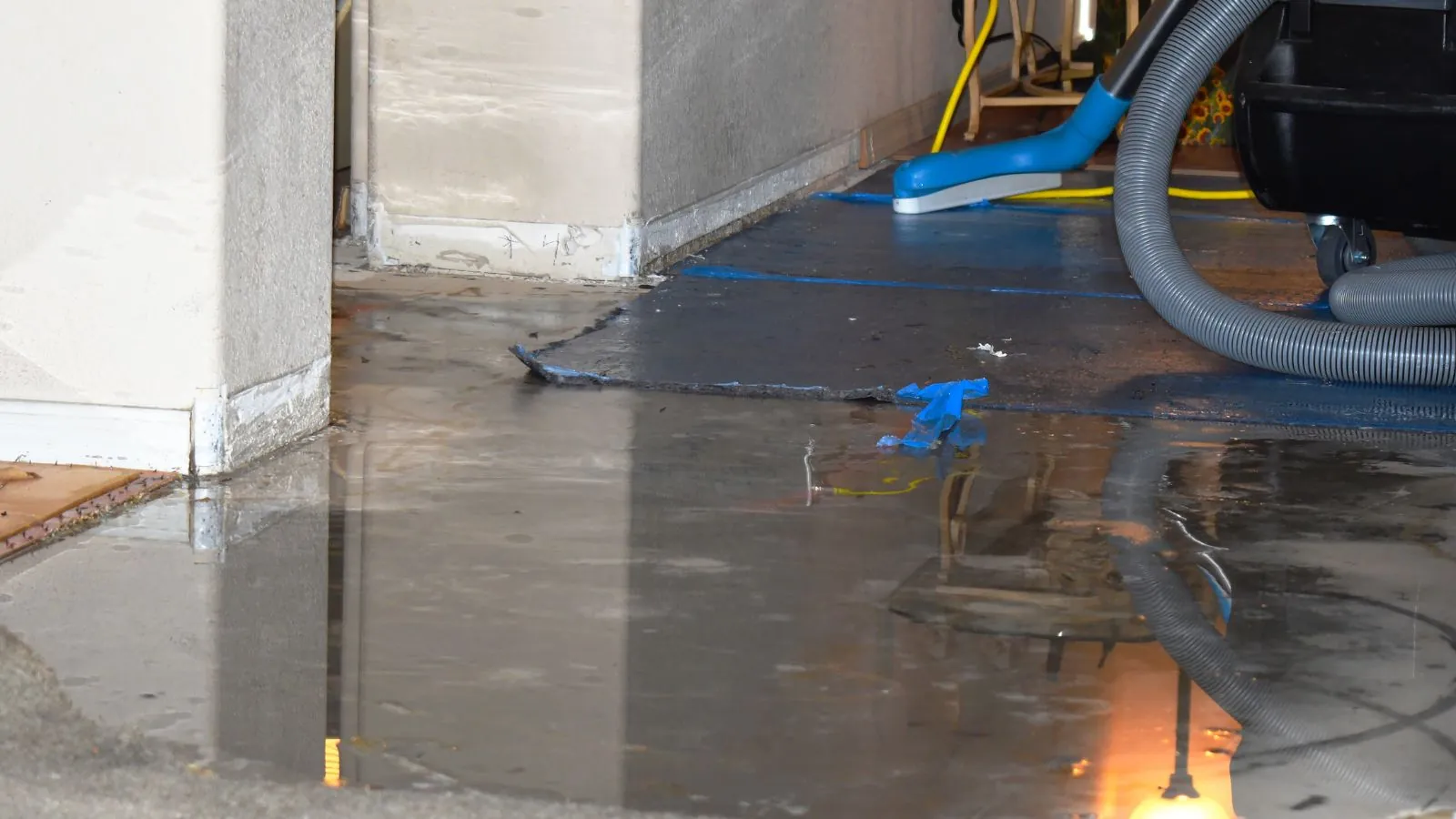
Mitigation means limiting the damage
A water mitigation company is hired to stop damage from growing. The goal is not to rebuild your kitchen. It is to take away the water, take away what cannot be saved and dry what can, so the loss stays as small as possible. Rebuilding comes after, and it is usually a separate scope.
The work follows the ANSI/IICRC S500 standard for water damage restoration, which is an industry standard for how water is classified and how drying is carried out. A company that names the standard and can explain what it changes about your job is easier to evaluate than one that only promises speed.
Step one: the call and the source
The call is the first piece of mitigation. A good dispatcher asks where the water came from, whether it is still running, how deep it is and what rooms it touched. The answers decide the crew, the equipment and the safety steps. If the water is still running, you are told to close the main valve. If it came through a drain, you are told to keep people out of it.
This is why a description helps more than a photo of a wet corner. A clear picture of the source tells the crew whether they are dealing with clean supply water, gray water or contaminated water before they arrive.
Step two: inspection and moisture mapping
On site, the crew finds the extent of the water. Meters read moisture in walls, floors and framing, and a thermal camera shows cool, wet areas behind surfaces that look dry. The result is a map of what is wet, and it becomes the baseline for the drying plan.
This step matters most when the loss is not obvious. A slow leak under a slab or behind a cabinet can wet far more than the stain suggests. For that reason, a visual check alone is not enough, and a company that skips readings is guessing.
Step three: extraction and removal
Standing water comes out first, using pumps and extractors. Then materials that cannot be dried are taken out. Carpet pad, soaked insulation and swollen drywall are common examples, and the category of water decides how much comes out. Contaminated water, such as sewage or river flood water, means porous materials are removed and the area is cleaned and disinfected.
Removal is often what homeowners find hardest to accept, because it looks like destruction. It is the opposite. Wet drywall and pad that stay in place hold water against the structure and invite mold. You can read more about the water category side on water extraction.
Step four: structural drying
- 1
Air movers
Fans move air across wet surfaces so water leaves the material.
- 2
Dehumidifiers
Machines pull the water out of the air so it does not settle back into materials.
- 3
Cavity drying
Small holes or openings let dry air reach inside walls and under cabinets.
- 4
Daily readings
The crew checks moisture each visit and moves or removes equipment as areas dry.
The EPA advises drying wet materials within 24 to 48 hours and keeping indoor humidity below 60 percent, ideally between 30 and 50 percent. Drying is finished when readings match dry reference points, not when a set number of days has passed.
Step five: cleaning, documentation and handoff
Affected surfaces are cleaned, and contents are sorted into what can be saved and what cannot. The company keeps photos, readings and a record of what was removed. That record is what you hand to your insurer and your repair contractor, and it is also how you can see the job was done to a standard.
When drying is complete, the equipment is removed and you are told what repairs are next. Mitigation is done. Replacing flooring, drywall and paint is the rebuild, which is separate work with its own scope and price.
What a mitigation company does not do
Decide coverage
Your insurer makes that decision. A company can document the loss and explain what it did.
Fix the plumbing
A plumber repairs the pipe, fixture or line that caused the loss. Mitigation deals with the water that came out of it.
Do the rebuild by default
Replacing drywall and flooring is a separate scope unless you agree otherwise in writing.
Promise a number up front
No exact price can be given from a description alone. Scope and price are explained before work starts.
Questions to ask before work starts
- Which water category do you think this is, and why?
- What will you remove, and what will you try to dry in place?
- How many air movers and dehumidifiers will you run, and for how many days?
- How will you record moisture readings, and can I get a copy?
- What is the scope and price, in writing, before you start?
- What parts of the job are not included, such as the rebuild?
There is no right number of fans. Equipment is sized to the volume of the space and the amount of water, so a vague answer here is a reason to keep asking. A company that explains its reasoning in plain words is one you can follow through the job.
How long a mitigation job runs
Most of the work happens in the first day, when water is extracted and wet materials come out. The drying phase that follows is measured in days rather than hours, and the number depends on what was wet and how humid the air is. A tile floor over concrete dries differently from a wood subfloor with insulation in the wall below it.
The company should check readings each visit and tell you what they show. When walls, floors and framing match your dry reference points, the equipment comes out. If readings stall, it is a sign that water is still trapped somewhere, and the crew opens another area or adds equipment rather than packing up.
Why timing is different in Bartow
Rain season and the clock on wet materials
The National Weather Service Tampa Bay office defines the West Central Florida rainy season as May 25 to October 10. Hurricane season runs June 1 to November 30. Those months overlap with the hottest, most humid weather in Polk County, and wet materials that sit in that heat are quick to grow mold.
That is the practical reason mitigation teams push to start the same day. The 24 to 48 hour window the EPA describes is tighter when the air is already damp.
Water that came from a split supply line is covered on burst pipe water damage, and a leak from the roof is on ceiling water damage repair. Neighboring towns are on the Highland City and Mulberry pages. To start a job, call (844) 950-6900.
A local question
Does a mitigation company in Bartow handle the building permit for repairs?
Drying and removal are separate from rebuilding. If the repair involves plumbing, a water heater or structural work, a permit may be needed from the City of Bartow Building Department. Ask the department before work begins.
Water damage in Bartow? Call now
The line is open around the clock. Tell us what happened and we explain scope and price before work starts.
Call (844) 950-6900