
Home / Blog / Mold Clean Up After a Leak: What Bartow Homeowners Can Do
Mold Clean Up After a Leak: What Bartow Homeowners Can Do
Seeing mold after a leak is stressful, and the urge is to scrub it right away. The order of operations matters more than the product, so this guide starts with the water and ends with how to decide when to call someone.
First, stop feeding it
Mold needs moisture, organic material and time. The material is everywhere in a house, and the time is short, so the thing you can control is moisture. The EPA says controlling moisture is the key to controlling mold. Cleaning a patch while the leak continues only buys a few days.
Find the source before anything else. Check under the sink, behind the toilet, around the water heater, at the window and along the ceiling below a bathroom. If you cannot find it, a plumber or a moisture inspection can. Once the source is fixed, the area needs to dry, ideally within the 24 to 48 hours the EPA recommends for wet materials.
Size decides who should do the work
The EPA says that mold covering more than about 10 square feet, roughly a three-foot by three-foot patch, may call for a professional. Smaller areas on hard surfaces, such as a patch on a bathroom wall or a window sill, are often handled by the homeowner.
Size is not the only factor. If the mold is on porous material such as drywall, ceiling tile or carpet, cleaning rarely gets it all, and removal may be needed. If the mold came from sewage or flood water, treat it as a contaminated job and call a professional. The EPA says sewage needs a professional.
What a careful homeowner clean up looks like
- 1
Protect yourself
Wear gloves, eye protection and a respirator rated for particles, and open a window if you can.
- 2
Contain the area
Close the door, cover vents in the room and avoid running the central air while you work.
- 3
Clean hard surfaces
Scrub with detergent and water, then wipe dry. Do not mix cleaning products.
- 4
Remove what cannot be cleaned
Bag porous materials that are visibly moldy, and take them out of the house sealed.
- 5
Dry thoroughly
Use a fan and a dehumidifier until the surface and the air are dry.
The EPA advises against running the HVAC system if you suspect mold, because it can spread spores to other rooms. Turn it off at the thermostat in the affected area or ask a technician for advice.
What not to do
- Do not paint or caulk over mold. It will keep growing under the coating.
- Do not use bleach as a cure-all. It is not a substitute for drying and removal, and it should never be mixed with ammonia or other cleaners.
- Do not use a household vacuum on moldy surfaces unless it has a suitable filter.
- Do not blow air across the area with a fan before containing it, because it moves spores around.
- Do not wait for the smell to go away. Smell fades when the area is dry and the material is gone.
Signs that a bigger problem is hiding
A small visible patch is sometimes the visible end of something larger. If a wall feels damp, if paint is bubbling, if a musty smell persists after you clean, or if the stain returns in a few days, the moisture is still there. Moisture meters and thermal cameras can find wet areas behind finished surfaces without opening them up.
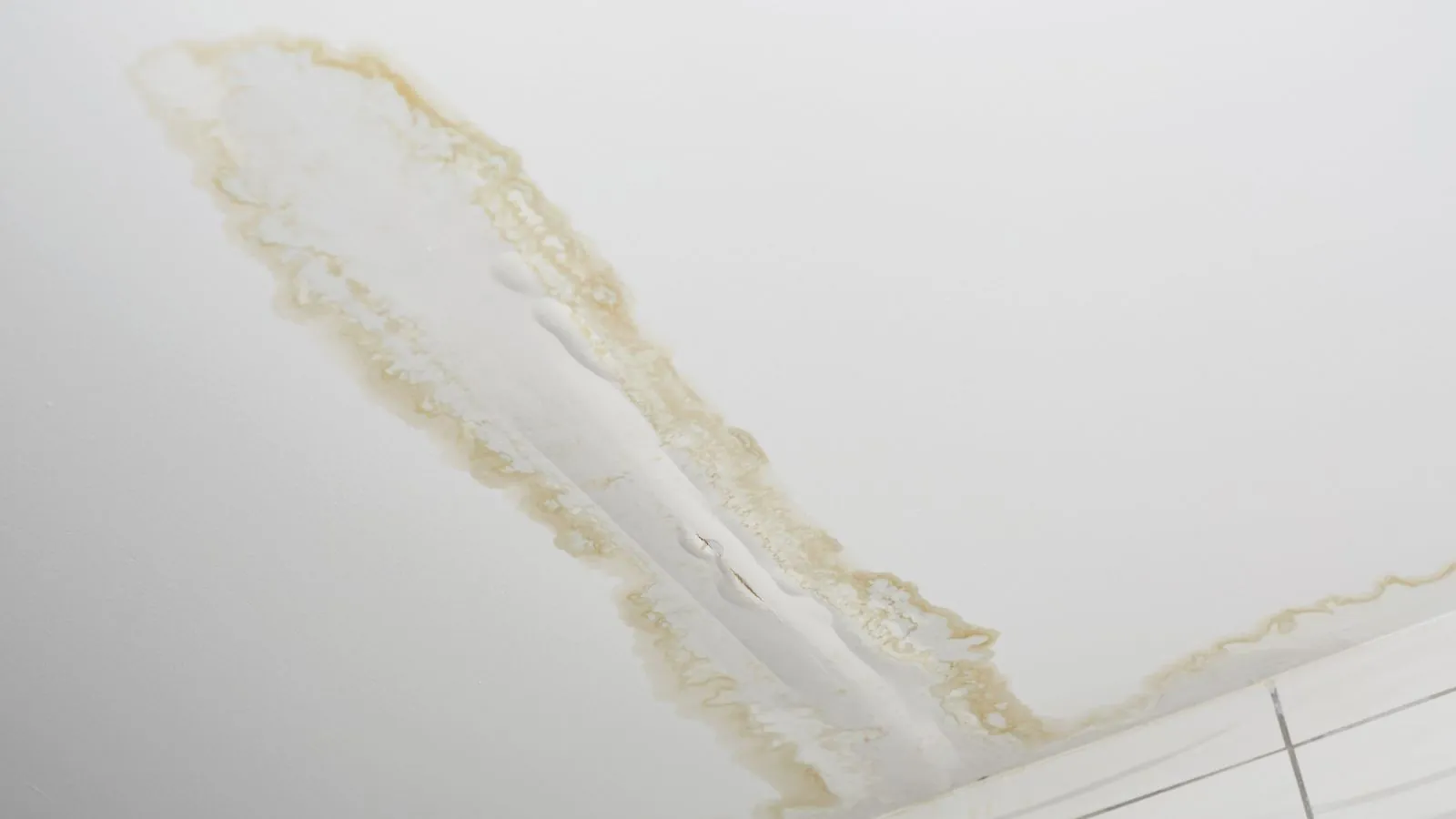
The same applies to a ceiling stain that grows after rain. It may be an active roof leak, and the cleanup follows the repair. See ceiling water damage repair for how wet ceilings are handled, and wall and drywall water damage repair if the wall itself is wet.
When to call a licensed professional
Call if the area is larger than about 10 square feet, if it keeps coming back, if it follows sewage or flood water or if it has spread into the HVAC system. Mold assessment and remediation are licensed trades in Florida, regulated by the Department of Business and Professional Regulation.
An assessor may not remediate a structure they assessed within the previous 12 months, which is meant to keep testing and cleanup separate. You can read the service details on mold remediation. If the cause was a leak that is still active, the drying comes first, and the process is described on structural drying and dehumidification. The IICRC S520 standard is the industry reference for mold remediation.
Humidity, not just leaks
In Florida, mold can grow without a leak when indoor air stays humid. The EPA says to keep indoor relative humidity below 60 percent, and ideally between 30 and 50 percent. A cheap hygrometer tells you where you stand. If readings stay above 60 percent in summer, the air conditioner may be oversized, the ducts may be leaking or a room may be too closed off from airflow.
Bathroom fans that vent to the attic instead of outside, a clogged AC condensate drain and wet crawl space soil are common contributors. Fixing those is cheaper than cleaning mold again and again. The AC side is covered on AC leak water damage.
Cleaning supplies and what they do
Detergent and water do most of the work on hard surfaces, because the goal is to remove the mold, not just discolor it. A stiff brush helps on grout and textured surfaces. Wipe with a damp cloth, then dry the surface with a clean towel and a fan.
Disposable cloths are easier to dispose of than rags, and sealed bags keep spores from spreading as you carry them out. Wash your clothes separately in hot water after the work and shower when you are done.
A Bartow timeline
Why summer leaks show up in fall
The National Weather Service Tampa Bay office defines the West Central Florida rainy season as May 25 to October 10. A small roof or window leak in June may only show up as a stain in August or September, after weeks of damp insulation and wood.
That delay is why mold sometimes seems to appear from nowhere. If you find mold after the wet season, check the roof, the attic and the walls below windows before you assume it is the air.
If you are not sure what you have, call (844) 950-6900 and describe it. We can tell you whether the situation sounds like a drying job, a mold job or a plumbing job. Nearby readers can see the pages for Highland City and Mulberry.
A local question
Does Bartow humidity make mold clean up harder in summer?
Yes. The EPA advises keeping indoor humidity below 60 percent, and Florida summers push indoor readings up, so drying after cleaning matters. Run a dehumidifier or the air conditioner and check humidity with a hygrometer.
Water damage in Bartow? Call now
The line is open around the clock. Tell us what happened and we explain scope and price before work starts.
Call (844) 950-6900